The Future of Litigation: E-Cigarettes and Vaping Products
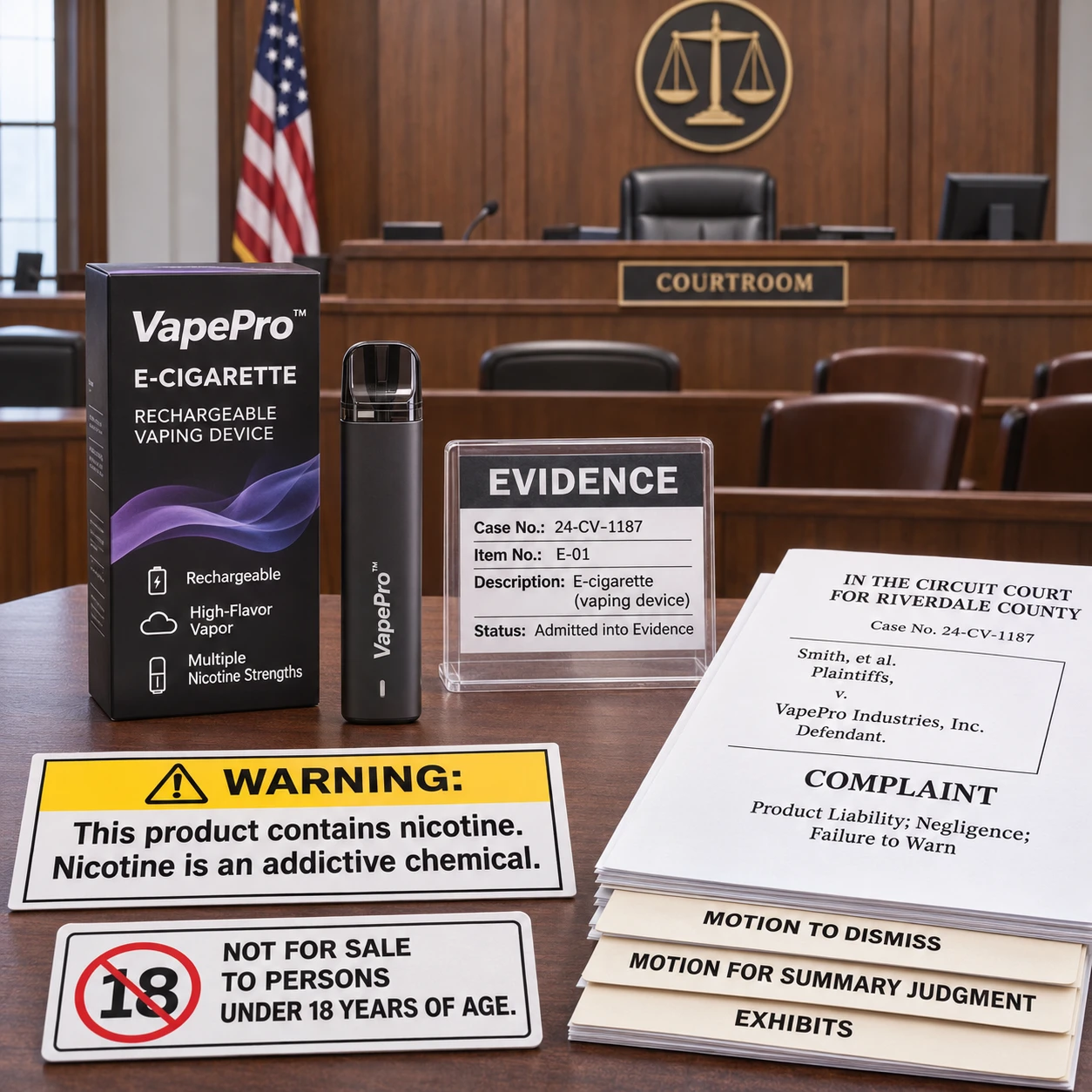
Litigation involving e-cigarettes and other vaping products is likely to keep evolving as courts assess new evidence, product designs, marketing practices, and regulatory requirements. The central questions are familiar from product liability law: what risks were known, what information reached consumers, and whether reliable evidence connects a particular product to a claimed injury.
Those questions do not produce one answer for every case. Devices, liquids, nicotine levels, use patterns, alleged injuries, and applicable laws can differ substantially. Understanding the likely direction of vaping lawsuits therefore starts with the legal issues and the facts each claim must establish.
Why vaping litigation is evolving
Vaping litigation is evolving because e-cigarettes combine changing product designs, varied ingredients, shifting marketing practices, and a regulatory landscape that continues to develop. These differences can create new disputes about what manufacturers knew and what consumers were told.
An e-cigarette may include a battery, heating element, cartridge or tank, and liquid that is aerosolized for inhalation. Products differ in power, construction, refillability, and composition. A claim about a battery malfunction raises different questions from one alleging harm related to nicotine exposure, a liquid ingredient, or a product’s instructions.
The market has also changed over time. New devices and formulations can arrive while scientific understanding, public warnings, and regulatory oversight are still developing. In a lawsuit, the relevant inquiry is often tied to the product and information available at the time of sale, not simply to what is known today.
That makes **case-specific analysis essential**. A later warning or regulation may inform the broader history, but it does not automatically prove that an earlier product was defective or that a particular injury was caused by it. Courts may also consider where a product was sold, who made it, and which state’s law applies.
The claims at the center of lawsuits
Vaping lawsuits may involve product liability, failure-to-warn, manufacturing or design allegations, and claims concerning marketing or labeling. Each theory has distinct elements, and an allegation must be supported by evidence rather than treated as an established fact.
In a **product liability** claim, a plaintiff may allege that a product had a design defect, a manufacturing defect, or inadequate warnings. A design claim may focus on whether a safer practical design was available and whether the product’s risks outweighed its benefits under the applicable legal test. A manufacturing claim may concern a particular unit that allegedly departed from its intended specifications.
A **failure-to-warn** claim typically asks whether a warning adequately described a relevant risk, whether the responsible company had a duty to provide it, and whether a different warning could have affected the user’s conduct. The precise legal standard varies by jurisdiction and product type.
Marketing and labeling allegations may focus on statements about nicotine, ingredients, flavors, device performance, or who the product is intended for. Plaintiffs may argue that packaging or promotions minimized risks or conveyed a misleading impression. Whether a statement was misleading, legally actionable, or connected to an injury depends on its wording, context, audience, and applicable law.
- Design or manufacturing claims: whether a product or component was allegedly unsafe or deviated from specifications.
- Warning claims: whether information about risks and safe use was adequate and timely.
- Marketing and labeling claims: whether product descriptions or promotions allegedly misrepresented material facts.
These theories can overlap, but they are not interchangeable. A complaint may raise several; the evidence and legal requirements determine which, if any, can proceed.
Who may be held accountable?
Depending on the facts and governing law, a vaping product lawsuit may name a manufacturer, importer, distributor, retailer, or another business involved in the product’s supply chain. Potential responsibility turns on each party’s role, conduct, and legal duties.
Manufacturers may face scrutiny over product design, quality control, testing, risk assessments, warnings, and marketing. Records such as design files, testing results, complaint databases, and internal communications may help show how a product was developed and how the company responded to safety concerns. Their relevance depends on the claims and the rules governing evidence.
Distributors and retailers may also be examined, although their potential liability varies across jurisdictions and circumstances. Relevant questions can include whether a company altered or relabeled a product, made its own representations, knew of a specific issue, or had a legally recognized duty. Simply appearing in a product’s distribution chain does not establish liability.
Where several companies contributed to a product, investigators may need to trace the device, liquid, components, packaging, and sales path. **Responsibility is not automatically shared equally**: the law may treat a designer, contract manufacturer, importer, and seller differently. Identifying the correct parties early can matter because records may be held by separate businesses and deadlines for bringing claims vary.
Evidence, causation, and product design
Evidence in a vaping injury claim may include the product itself, purchase and use records, medical documentation, testing, and expert analysis. The central challenge is connecting reliable evidence to the specific product, alleged defect, and claimed injury without assuming that timing alone proves causation.
Preserving the device, packaging, liquid container, receipts, and photographs can help establish what product was involved and how it was used. If a device allegedly overheated or failed, its condition and any available battery or charging components may matter. A product should not be altered or discarded before a qualified professional or attorney can advise on preservation.
Evidence may also include medical records, a detailed timeline of use and symptoms, prior or concurrent exposures, product testing, and company records obtained through litigation. Expert witnesses may address technical issues such as design, chemistry, engineering, or causation. The court determines whether expert opinions meet applicable evidentiary standards.
Causation is often a central dispute. A plaintiff generally must satisfy the relevant legal standard for showing that the defendant’s conduct or product caused the claimed harm. The analysis can depend on the injury, exposure history, scientific evidence, and jurisdiction. A diagnosis or an allegation, by itself, does not establish that a particular vaping product caused an injury.
Product design may raise a related question: whether a proposed alternative was feasible, safer, and legally relevant at the time. A design that reduces one risk may affect performance, cost, or other risks. Courts and juries may weigh such evidence under the law that applies to the case.
The influence of regulation and warnings
Regulatory oversight and product warnings can shape vaping litigation by setting requirements, documenting agency concerns, and informing disputes about what companies disclosed. Regulatory compliance may be relevant evidence, but it does not necessarily resolve every state-law product liability claim.
In the United States, the Food and Drug Administration regulates tobacco products, including e-cigarettes, under federal law. Its rules and product authorization processes can affect which products may be marketed and what obligations apply. Current information is available from the FDA’s tobacco products resource.
Warning labels and instructions can become important evidence. A court may examine the wording, visibility, placement, and timing of a warning, as well as whether it addressed the risk alleged in the case. The inquiry is not limited to whether a label existed; the question may be whether it met the applicable legal duty and whether any alleged deficiency mattered to the claim.
Regulatory developments can also create questions about federal and state authority, preemption, and the relationship between agency requirements and state-law remedies. These are technical issues that depend on the statute, product, and claim. **A regulatory finding is not a universal verdict** on whether a product was safe in every respect or whether an individual lawsuit succeeds.
What the future may hold for vaping cases
The future of vaping litigation will likely turn on product-specific evidence, evolving regulations, and courts’ treatment of causation, warnings, and design claims. New cases may refine legal standards, but no general trend can predict the outcome of an individual lawsuit.
Several issues may continue to draw attention: how companies document product testing and consumer complaints; whether marketing accurately describes products and risks; how courts assess expert evidence; and how regulatory actions interact with state product liability law. The answers may vary across jurisdictions and product generations.
For anyone evaluating a potential claim, a practical starting point is to preserve relevant records and identify the product clearly. Note the brand, model, batch or lot information, purchase date and seller, and keep original packaging where possible. Record a factual timeline and retain related receipts and communications. Avoid drawing medical or legal conclusions from those records alone.
Common pitfalls include treating every vaping product as identical, assuming a warning label settles the case, or relying on a general association as proof of individual causation. Each can obscure important differences in design, exposure, evidence, and governing law. A qualified attorney can assess applicable deadlines and legal options, while a healthcare professional can address medical questions.
The most reliable view of vaping litigation is therefore measured: claims may raise serious questions about product safety and corporate conduct, but allegations require proof. As products and oversight change, careful attention to **evidence, causation, and the law applicable to each case** will remain central.