The Impact of FDA Regulations on Tobacco Lawsuits
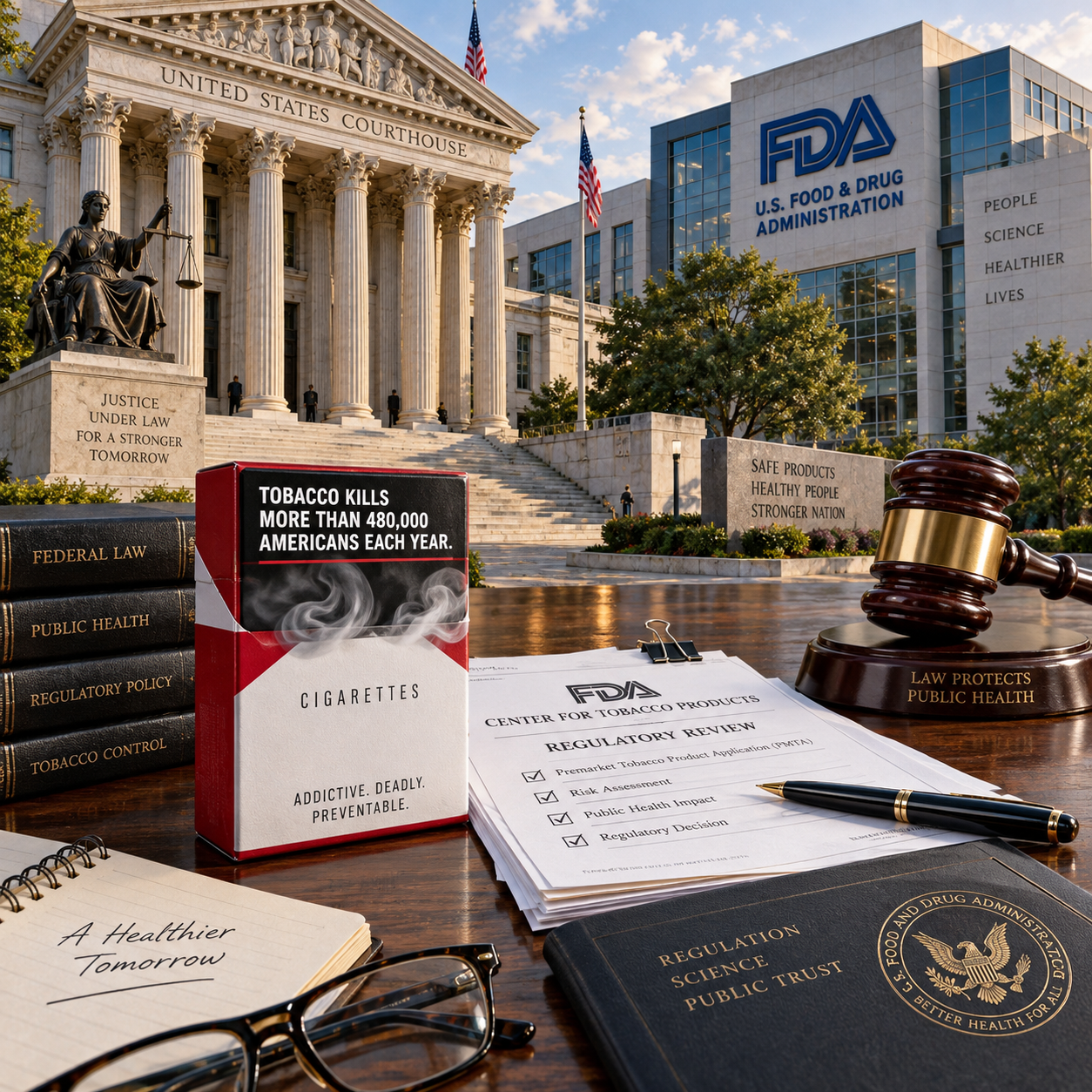
FDA oversight shapes how tobacco products are made, marketed, labeled, and sold in the United States. Those rules can matter in tobacco lawsuits, but they do not decide by themselves whether a company is liable or whether an individual can sue.
The key distinction is between regulatory enforcement and civil litigation. The U.S. Food and Drug Administration (FDA) administers federal tobacco regulations; courts consider claims under applicable law, including state tort law. How the two systems intersect depends on the product, the alleged conduct, the legal claim, and the jurisdiction.
What the FDA Regulates in the Tobacco Industry
The FDA regulates many aspects of tobacco products, including certain product standards, required disclosures, labeling, and marketing. Its authority comes largely from the Family Smoking Prevention and Tobacco Control Act, though the specific rules and requirements vary by product and circumstance.
The law gave the agency authority over tobacco products such as cigarettes, cigarette tobacco, roll-your-own tobacco, and smokeless tobacco, and the FDA has also asserted authority over additional product categories. Its work can include reviewing applications before certain new products are marketed, overseeing required health warnings, restricting sales to minors, and taking enforcement action when it believes a federal requirement has been violated.
Premarket review is not a general safety guarantee. Depending on the product and pathway, FDA review or authorization means the agency has made a determination under the applicable statutory standard. It does not mean the product is harmless, risk-free, or approved for every use. The FDA explains its tobacco-product authorities and requirements on its official tobacco products page.
Regulatory scope also has limits. The FDA’s role is distinct from that of state and local governments, which may regulate matters such as sales, taxes, and smoke-free spaces, subject to federal and state law. That division matters in litigation: a rule governing product labeling may be relevant to a warning claim, while a local sales restriction may have little bearing on a product-defect allegation.
How FDA Rules Relate to Tobacco Lawsuits
FDA rules can provide context or evidence in a tobacco lawsuit, but they do not automatically prove a claim. Courts may consider relevant regulations, agency records, product labels, or enforcement actions alongside the evidence and legal standards that apply to the case.
For example, a lawsuit may allege that a manufacturer failed to provide an adequate warning, marketed a product deceptively, or sold a product with a defect. FDA requirements can help show what disclosures were required at a particular time or what the agency said about a product category. But a plaintiff generally must still establish the elements of the particular cause of action, such as causation and legally recognized harm, under the governing law.
Regulatory materials are not interchangeable with a court’s findings. An FDA warning letter or other enforcement record may document the agency’s position about a specific alleged violation. It does not necessarily establish that a company caused an individual’s illness or that every allegation in a complaint is true. Likewise, an agency’s lack of enforcement action does not necessarily resolve whether a state-law claim can proceed.
Timing is crucial. Regulations and required warnings can change, and a lawsuit may involve products sold over many years. Lawyers may need to compare the product’s design, label, marketing, and sales period with the rules in effect at the time. A current requirement cannot automatically be treated as proof of what a company was required to do decades earlier.
Product Liability and Failure-to-Warn Claims
Tobacco product liability cases may involve claims about warnings, marketing, product design, or other alleged misconduct. FDA labeling rules can be relevant to failure-to-warn claims, but the effect depends on the claim, the evidence, and applicable federal and state law.
A failure-to-warn claim typically alleges that a company did not adequately communicate a product’s risks. In tobacco litigation, the record may include package warnings, advertising, internal company documents, public-health information, and the plaintiff’s history of use and exposure. A court may examine whether a warning was legally adequate and whether any alleged deficiency contributed to the claimed injury.
Marketing and labeling can also raise questions about how a product was presented to consumers. A claim might concern statements about characteristics, risks, or intended use. The FDA’s rules may set particular requirements, but satisfying one federal labeling requirement does not necessarily answer every state-law question about misleading conduct, causation, or damages.
Product liability claims are fact-specific. The type of product, the dates of purchase and use, the illness alleged, the warnings available, and the plaintiff’s circumstances can all affect the legal analysis. A person should not assume that the presence of a warning defeats a claim, or that a disputed warning automatically establishes liability.
FDA Compliance, Violations, and Legal Responsibility
FDA compliance does not automatically eliminate civil liability, and an alleged regulatory violation does not automatically establish it. Regulatory status is one part of the evidence; courts apply the legal standards for the specific claim.
A company may argue that it complied with federal requirements, while a plaintiff may point to other evidence about product risks, marketing, or conduct. The significance of compliance can vary: it may support a defense or help explain what disclosures were provided, but it may not answer all questions under state tort law.
Similarly, an FDA inspection, warning letter, penalty, or other enforcement measure can be relevant without deciding an individual lawsuit. The record may concern a particular product, facility, or period. A court will consider what the action actually addressed and whether it has a valid connection to the plaintiff’s allegations.
It is useful to separate three questions: What rule applied? What did the company do? And does that conduct satisfy the elements of the plaintiff’s claim? Treating an agency action as a final answer to all three can lead to mistaken conclusions.
Federal Rules and State-Law Claims
Federal tobacco rules can preempt some state-law claims, but they do not necessarily bar every tobacco lawsuit. Federal preemption is a legal doctrine that may prevent state requirements from conflicting with or duplicating federal requirements, and its application depends on the claim and governing law.
The Family Smoking Prevention and Tobacco Control Act includes provisions addressing the relationship between federal requirements and state or local rules. Courts may distinguish between a claim that would impose a different product-labeling requirement and one based on other conduct, such as certain marketing or sales practices. The outcome can depend on the statutory language, the theory pleaded, the evidence, and relevant court decisions.
As a result, broad statements such as “federal law blocks all tobacco cases” or “FDA rules never affect state claims” are unreliable. The analysis may also differ by product category and jurisdiction. A lawyer evaluating a case will typically examine the exact state-law claim and the federal provision said to preempt it, rather than rely on a general summary.
What This Means for People Considering a Lawsuit
People considering a tobacco lawsuit should preserve relevant records and seek advice about their specific facts, deadlines, and jurisdiction. FDA rules may be part of the analysis, but they do not determine eligibility or predict the outcome on their own.
Useful information to gather can include:
- Medical records and diagnoses, including the dates and providers involved.
- Details about tobacco products used, such as brand, product type, approximate dates, and frequency of use.
- Receipts, packaging, photographs, or other records that identify a product or its warnings.
- Information about advertising or statements that influenced a purchase or use, if relevant to the potential claim.
Keep original documents where possible and write down a timeline while details are fresh. Avoid changing or discarding product packaging if it may be relevant. Do not assume that a specific FDA action proves your case, or that a company’s compliance means you have no rights.
Deadlines and legal standards vary. Limitation periods, causation requirements, available claims, and preemption arguments can differ by state and by case. A qualified attorney can review the medical and product history, explain which records matter, and assess whether a claim may be available. No general article can substitute for advice based on the applicable law and individual facts.
Frequently Asked Questions
Does FDA regulation prevent someone from filing a tobacco lawsuit?
No. FDA regulation does not, by itself, prevent someone from filing a tobacco lawsuit. Whether a claim can proceed depends on the legal theory, evidence, jurisdiction, and any applicable defenses, including preemption.
Does FDA approval or authorization mean a tobacco product is safe?
No. FDA review or authorization is not a finding that a tobacco product is harmless or risk-free. It reflects a decision under the legal standard and process that apply to that product and application.
Can FDA violations help support a tobacco-related claim?
Potentially. Evidence of an FDA violation may be relevant to a claim, but its legal effect varies. It does not automatically establish causation, damages, or liability, and a court may consider the scope and circumstances of the agency action.
Do federal tobacco regulations override state lawsuits?
Not in every case. Federal preemption may bar certain state-law theories or requirements, while other claims may remain available. The answer depends on the claim’s substance, the federal rule involved, and applicable court decisions.